

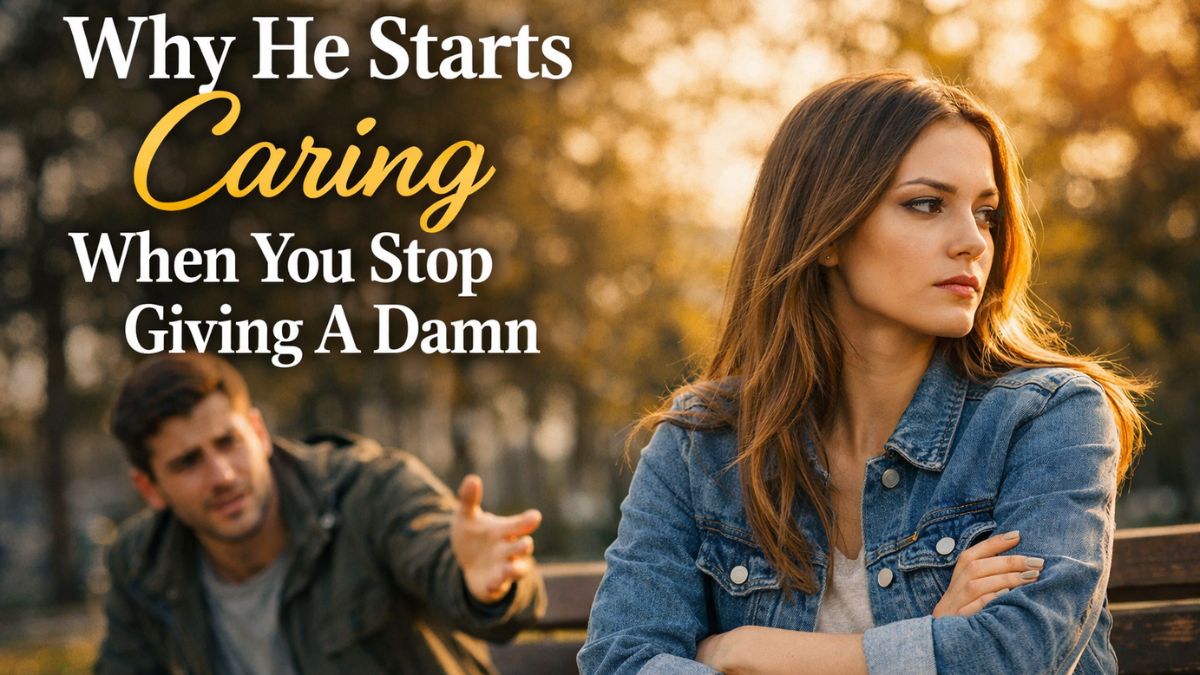
There comes a moment in many relationships when something quietly changes. You stop texting first. You stop overthinking his replies. You stop waiting for his attention like it’s the highlight of your day. And then suddenly—almost confusingly—he starts showing up. He texts more, calls unexpectedly, and begins to act like you matter in ways he never did before.
It feels ironic, doesn’t it? When you were giving your energy, your care, and your attention so freely, it often felt like he barely noticed. But the moment you pulled back and stopped trying so hard, he began leaning in. This emotional shift isn’t random or magical—it’s rooted deeply in human psychology, emotional patterns, and the way people perceive value in relationships.
Understanding why this happens can help you protect your emotional well-being and build healthier, more balanced connections.
The Power of Emotional Availability
When you’re constantly available—replying instantly, prioritizing him, and always making time—you unintentionally create a dynamic where your presence feels guaranteed. There’s no uncertainty, no mystery, and no sense of loss attached to you. In simple terms, he doesn’t feel like he could lose you.
But when you start focusing on yourself and step back emotionally, your availability changes. Suddenly, your time and attention are no longer unlimited. This shift can create a sense of curiosity and even urgency in him. He begins to notice your absence in ways he never appreciated your presence.
It’s not about playing games; it’s about natural human behavior. People often value what feels limited or uncertain more than what feels constant and guaranteed.
The Psychology of Taking You for Granted
One of the harsh truths in relationships is that consistency without boundaries can sometimes lead to being taken for granted. When you give endlessly without expecting balance, it sets a silent standard. He begins to assume that your care will always be there, no matter how little effort he puts in.
This isn’t always intentional or malicious. Often, it’s subconscious. Humans adapt quickly to what becomes normal. If your love, attention, and effort become predictable, they may stop feeling special to him.
But when you pull back and disrupt that pattern, it forces him to re-evaluate. He begins to notice the difference between how things were and how they are now. That contrast can trigger a renewed sense of appreciation—and sometimes, regret.
Scarcity Creates Value
There’s a simple principle that applies not only to relationships but to life in general: scarcity increases value. When something becomes less accessible, it often becomes more desirable.
When you stop giving so much of yourself, your attention becomes something he has to earn rather than expect. This change can shift his perception of you. You’re no longer someone who revolves around him—you’re someone with your own life, priorities, and boundaries.
This independence can be incredibly attractive. It signals confidence, self-respect, and emotional strength. And those qualities naturally draw people in.
The Role of Ego and Challenge
For many people, especially in the early stages of dating, there’s an unspoken element of challenge. When everything comes easily, it can sometimes feel less exciting. But when something requires effort, it becomes more engaging.
When you stop chasing or seeking his attention, it can trigger his ego. He may start to wonder why you’ve changed, what he might be losing, or whether someone else now has your attention. This curiosity can lead him to invest more effort in reconnecting with you.
Again, this doesn’t mean you should play games or manipulate emotions. It simply highlights how human nature responds to effort, challenge, and perceived loss.
You Start Choosing Yourself
One of the most powerful changes isn’t in him—it’s in you. When you stop giving a damn, it often means you’ve reached a point where you’re choosing yourself over the constant need for validation.
You begin to prioritize your peace over overthinking, your time over waiting, and your self-worth over chasing someone who isn’t meeting you halfway. This internal shift changes your energy in a way that others can feel.
Confidence, independence, and self-respect are deeply attractive qualities. When you embody them, people naturally respond differently to you. He may not even fully understand why he’s drawn back in—but he feels the difference.
He Realizes What He Might Lose
Nothing creates clarity quite like the possibility of loss. When you were always there, he didn’t have to think about what life would be like without you. But when you step back, that possibility becomes real.
He starts to notice the silence where your messages used to be. He realizes the absence of your attention, your care, and your presence. And sometimes, that realization is what finally pushes him to act.
It’s not that you became more valuable overnight—it’s that he finally recognized the value that was always there.
The Danger of Misreading the Situation
While it can feel satisfying to see him suddenly care, it’s important to approach this shift with clarity. Not every renewed effort is genuine or long-lasting. Sometimes, people respond to distance temporarily, only to fall back into old patterns once they feel secure again.
This is why it’s crucial not to lose yourself in the moment. His change in behavior should be consistent, respectful, and meaningful—not just reactive.
Pay attention to whether his actions align with your standards. Are you receiving the effort you deserve, or is he simply reacting to your withdrawal?
It’s Not About Playing Games
There’s a common misconception that pulling away is a strategy to make someone care. But the truth is, genuine emotional detachment isn’t about manipulation—it’s about self-preservation.
When you stop giving a damn, it usually means you’ve reached a point where you’re no longer willing to overextend yourself for someone who isn’t reciprocating. It’s a boundary, not a tactic.
And ironically, that authenticity is what makes it powerful. You’re not trying to get a reaction—you’re simply choosing not to settle for less than you deserve.
What You Should Really Take From This
The real lesson isn’t about how to make him care. It’s about understanding your own value and refusing to give it away to someone who doesn’t recognize it.
If someone only starts caring when you pull away, it raises an important question: why did it take your absence for them to see your worth?
A healthy relationship doesn’t rely on distance to create appreciation. It’s built on mutual effort, consistent respect, and genuine care from both sides.
Finding Balance in Love
At its core, this dynamic is about balance. Giving love, attention, and effort is beautiful—but it should never come at the cost of your self-respect.
When both people value each other equally, there’s no need for emotional withdrawal to spark interest. The connection flows naturally, without confusion or imbalance.
So if you ever find yourself in a situation where he only starts caring when you stop, take a moment to reflect. Not on how to keep his attention—but on whether his attention is truly worth having.
The Truth You Shouldn’t Ignore
The truth is simple, even if it’s uncomfortable: the right person won’t need to be reminded of your value through your absence. They’ll recognize it in your presence.
If someone only shows up when you pull away, it’s not a sign to give more—it’s a sign to reconsider what you’re accepting.
Because at the end of the day, the goal isn’t to make him care. The goal is to be with someone who always does.
FAQs
1. Why does he start caring only when I pull away?
Because your absence creates a sense of loss and makes him realize your value, which he may have taken for granted before.
2. Is it a good idea to stop caring to make him chase me?
Not really. It should come from self-respect, not as a strategy. Genuine detachment works better than playing games.
3. Will he keep caring once I give attention again?
It depends. If his feelings are real, he will stay consistent. If not, he may return to old behavior once he feels secure again.