

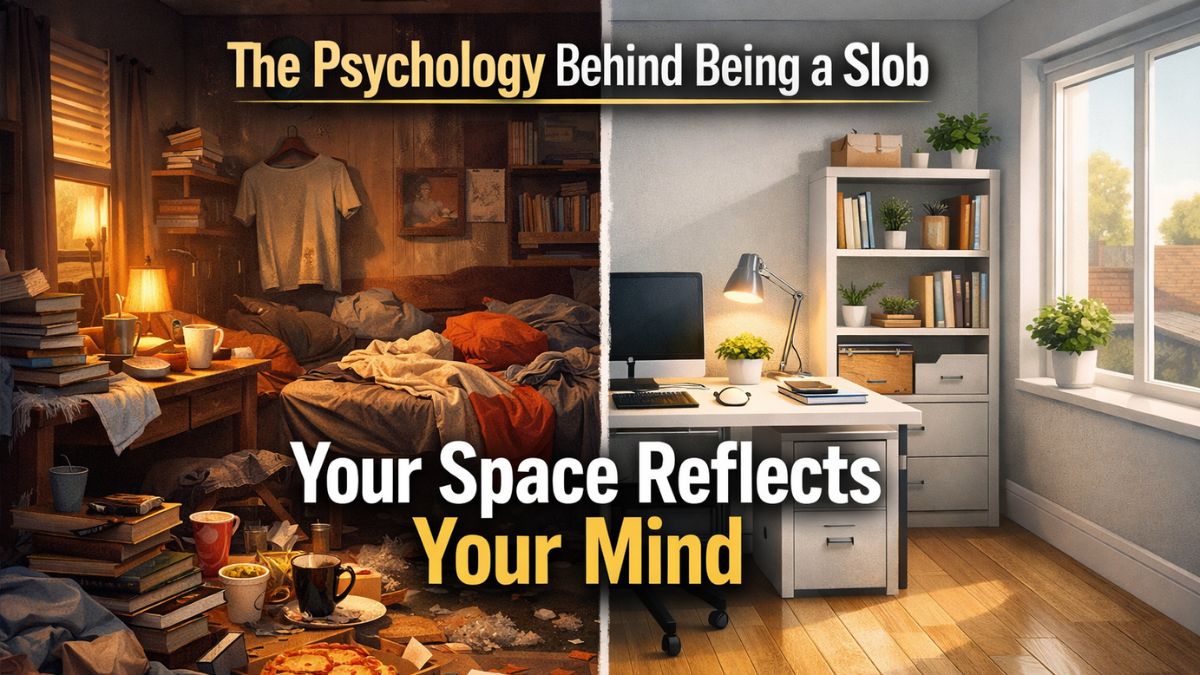
In today’s world, a home or living space is no longer merely a physical entity; it has evolved into a reflection of our personality, habits, and mental state. While many people prefer a clean and tidy environment, there are others whose living spaces remain perpetually cluttered or disorganized. Such individuals are commonly referred to as “slobs.” But is being messy simply a habit, or does it stem from deeper underlying psychological causes? Let us explore this subject in greater detail.
The Connection Between Messy Spaces and Personality
The way a person chooses to live often mirrors their patterns of thought and action. Individuals who consistently inhabit messy environments are frequently found to be creative, flexible, and open-minded. For them, maintaining perfect order takes a backseat to the exploration of ideas and experiences. Such individuals often find greater comfort in freedom and spontaneity than in adhering to rigid rules or structures.
Conversely, a messy living space can sometimes indicate a lack of organizational skills or an inability to effectively manage life’s priorities. It is crucial to note that a messy person is not necessarily lazy; rather, their disorganization is often a byproduct of their lifestyle and mental load.
The Impact of Stress and Mental Overload
When an individual experiences high levels of stress in their life, the repercussions often manifest in their immediate surroundings. Mental fatigue or emotional overload can lead people to devote less attention to maintaining their physical environment.
For instance, if a person is grappling with work-related pressures, family issues, or personal struggles, they may simply lack the energy required to keep their room clean and tidy. In such cases, a messy living space can serve as a signal that the individual is mentally overwhelmed and in need of rest or support.
Procrastination and Habit Formation
Procrastination can also be a significant contributing factor to a messy lifestyle. Many people habitually put off small chores—such as putting away clothes, returning items to their proper places, or cleaning up—until later. Gradually, these minor habits snowball into a significantly cluttered living environment.
When an individual repeatedly postpones cleaning tasks, this behavior eventually solidifies into a habit, resulting in an environment that becomes cluttered almost automatically. This behavior is often associated with a lack of discipline, yet it is something that can be changed over time.
The Connection Between Creativity and Messiness
Interestingly, not every messy space is inherently negative. According to numerous studies and observations, some creative individuals feel more productive in messy environments. For them, a cluttered setting stimulates their thoughts and aids them in generating new ideas.
For such individuals, a messy space is not a problem, but rather a comfort zone—a place where they allow their thoughts to flow freely, without any restrictions.
Decision Fatigue and Clutter
In today’s fast-paced world, we make countless decisions on a daily basis. This continuous decision-making process can drain our mental energy—a phenomenon known as “decision fatigue.” When a person is mentally exhausted, they often lack the additional effort required to organize their surroundings.
In this state, clutter tends to accumulate gradually. Therefore, a messy space can often serve as an indicator that an individual has become overwhelmed by their daily decisions and responsibilities.
Emotional Attachment and Clutter
Some people develop an emotional attachment to their belongings, which makes it difficult for them to discard items. Old clothes, sentimental keepsakes, or even seemingly useless objects may hold a certain emotional value for them.
Consequently, their living space gradually becomes filled with clutter. While this behavior often reflects a sentimental personality, if it spirals out of control, it can negatively impact one’s living environment.
Messy Spaces and Self-Perception
The way an individual perceives their environment also influences their self-perception. Some people feel perfectly comfortable living in a messy space and remain unbothered by it. Others, however, begin to feel disorganized and stressed when surrounded by a messy environment.
This depends entirely on an individual’s mindset and personal preferences. Therefore, being messy does not necessarily imply a negative personality; rather, it exists on a spectrum encompassing various psychological factors.
Conclusion
A messy living space is not merely a physical condition; it can be the result of various psychological factors—such as stress, procrastination, creativity, emotional attachment, and lifestyle habits. Not every messy person is lazy or careless; rather, there may be various underlying reasons for their behavior.
If someone is concerned about their messy environment, the first step is to understand its root cause. Through small changes and consistent habits, anyone can improve their living space while simultaneously enhancing their mental well-being.
FAQs
Q1. Does having a messy space mean someone is lazy?
A. Not necessarily. Messiness can be linked to stress, busy schedules, low energy, or even different personality traits rather than laziness.
Q2. Can a messy environment affect mental health?
A. Yes, a cluttered space can increase stress, reduce focus, and make it harder to relax, especially for people who prefer order.
Q3. Is being messy always a negative trait?
A. No. Some people are naturally more creative or flexible and may function well in less organized environments without it impacting their productivity.