

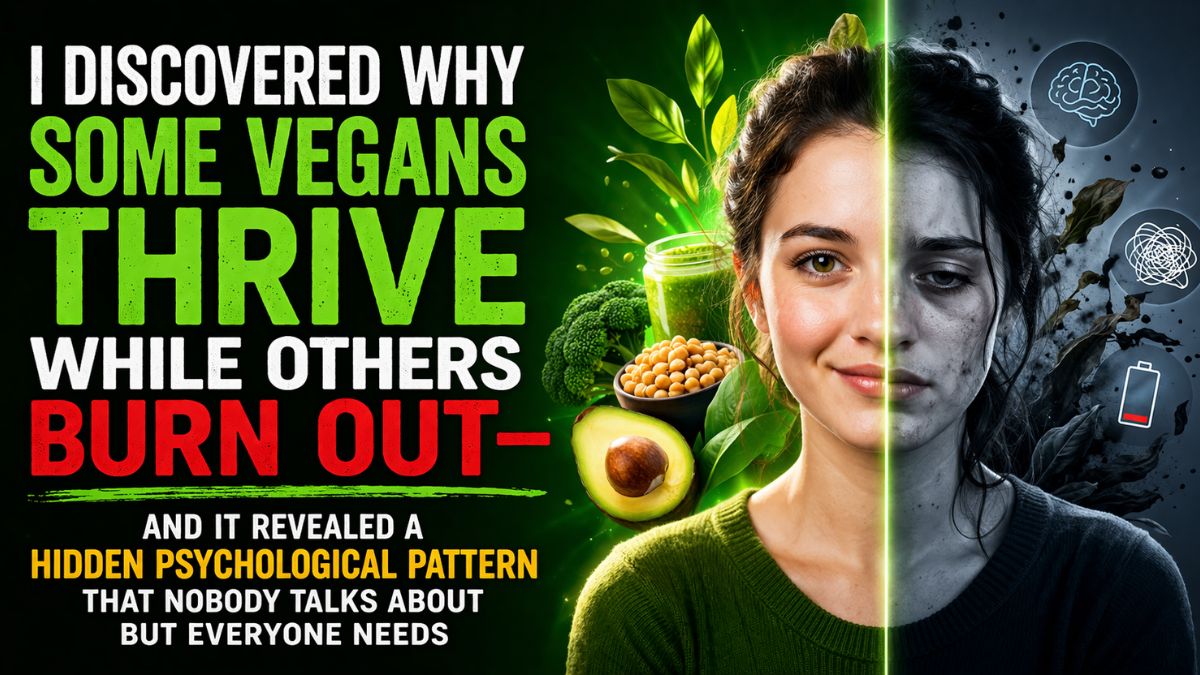
When people decide to go vegans , the intention often comes from a place of compassion, health awareness, or environmental concern. Yet, something curious happens along the way. While some individuals seem to thrive—radiating energy, clarity, and long-term commitment—others quietly struggle, eventually burning out and returning to old habits. This contrast isn’t just about diet or discipline. Beneath the surface lies a powerful psychological pattern that rarely gets discussed, but once understood, explains everything.
The Illusion of Willpower
At first glance, it’s easy to assume that successful vegans simply have stronger willpower. They resist cravings, stay consistent, and align their actions with their beliefs. But this explanation is misleading. Willpower is a limited resource, and relying on it alone often leads to exhaustion. Those who burn out are usually the ones trying to fight their instincts every single day, turning their lifestyle into a constant battle.
On the other hand, thriving vegans don’t just rely on resistance—they reshape their mindset. Instead of feeling like they are “giving something up,” they genuinely believe they are gaining something better. This subtle shift removes the daily struggle and replaces it with a sense of purpose.
Identity vs. Obligation
The real difference lies in identity. People who succeed long-term don’t just follow a vegan diet—they become vegan in how they see themselves. It becomes part of who they are, not just something they do. This internal alignment creates consistency without friction.
In contrast, those who burn out often approach veganism as an obligation. They may feel guilty, pressured, or motivated by external influences like trends or social expectations. When motivation is external, it fades quickly. Over time, the gap between what they want and what they feel forced to do creates emotional fatigue.
The Role of Emotional Connection
Another hidden factor is emotional connection. Thriving vegans tend to have a deep, personal reason behind their choice. It could be ethical beliefs, a connection to animals, or a strong commitment to health. This emotional anchor keeps them grounded even when challenges arise.
Burnout often happens when this connection is weak or unclear. Without a strong “why,” every inconvenience feels heavier. Social situations become stressful, cravings feel more intense, and the lifestyle starts to feel restrictive rather than empowering.
Perfectionism: The Silent Trap
Perfectionism is one of the biggest psychological traps in veganism. Many people start with an “all or nothing” mindset, believing they must follow the lifestyle perfectly. One mistake—a slip-up at a party or a moment of temptation—can trigger guilt and self-criticism.
Thriving vegans, however, embrace flexibility. They understand that progress matters more than perfection. Instead of seeing mistakes as failures, they treat them as part of the journey. This mindset reduces pressure and makes the lifestyle sustainable over time.
Social Pressure and Isolation
Human beings are social creatures, and our environment plays a huge role in our habits. Those who thrive often find ways to build supportive communities, whether online or offline. They surround themselves with like-minded individuals who reinforce their choices.
In contrast, those who burn out often feel isolated. They may face criticism, lack of understanding, or constant questioning from others. Without support, the emotional burden increases, making it harder to stay committed.
Reframing the Experience
One of the most powerful psychological shifts is how the experience is framed. Thriving vegans see their lifestyle as an opportunity—an exploration of new foods, values, and ways of living. They focus on abundance rather than restriction.
Those who struggle often frame it as limitation. They think about what they can’t eat, what they’re missing out on, and how different they feel from others. This negative framing slowly drains motivation and enjoyment.
The Key Insight: Alignment Over Effort
The hidden pattern becomes clear when you step back. Success in veganism isn’t about trying harder—it’s about aligning your beliefs, identity, and emotions with your actions. When everything is in sync, the lifestyle feels natural. When it’s not, it feels forced.
This is why some people thrive effortlessly while others feel like they’re constantly pushing uphill. The difference isn’t in the diet itself, but in the psychology behind it.
Conclusion: A More Sustainable Path Forward
Understanding this psychological pattern changes everything. If you’re struggling, it’s not a failure of discipline—it’s a sign that something deeper needs alignment. By focusing on identity, building a strong emotional connection, letting go of perfectionism, and creating a supportive environment, the journey becomes lighter and more sustainable.
Veganism, like any lifestyle change, isn’t just about what you eat. It’s about how you think, what you believe, and who you become in the process. When those pieces come together, thriving is no longer a mystery—it becomes the natural outcome.
FAQs
Q1. Why do some vegans experience burnout?
A: Burnout often comes from restrictive thinking, lack of balance, or emotional pressure.
Q2. What helps vegans thrive long-term?
A: A flexible mindset, proper nutrition, and realistic expectations support long-term success.
Q3. Is veganism mentally challenging?
A: It can be if approached rigidly, but a balanced approach makes it sustainable.