

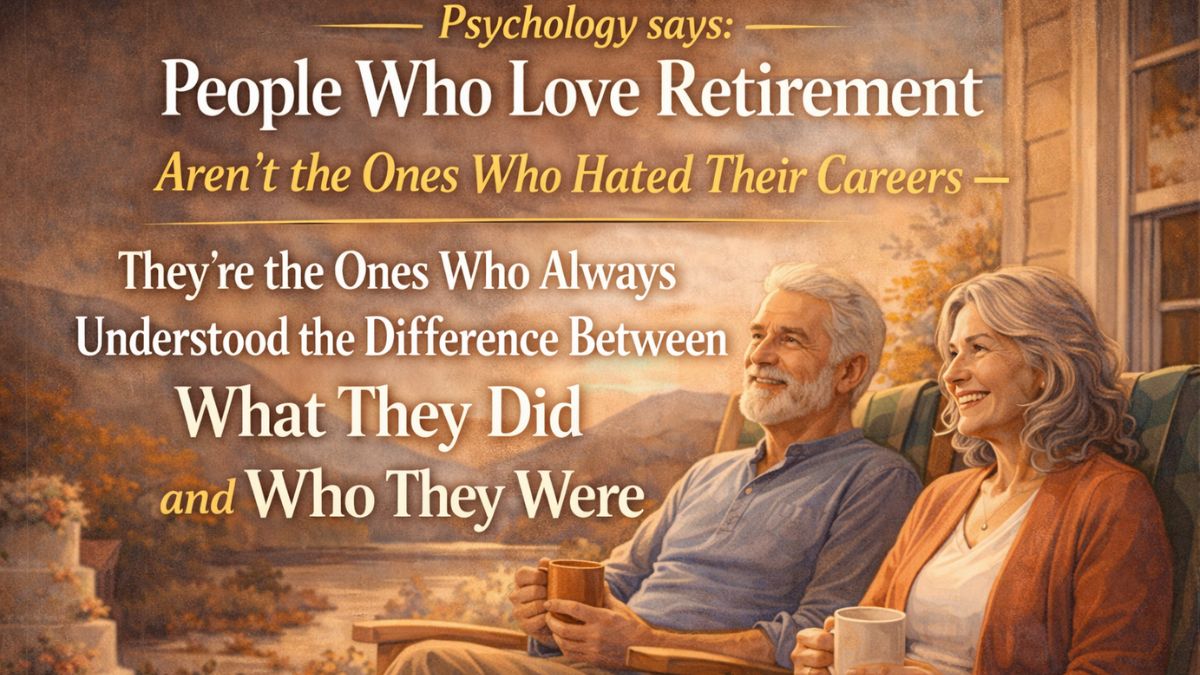
Retirement is often imagined as a long-awaited escape from the pressures of work. Many people assume that those who enjoy retirement the most are the ones who spent decades feeling trapped in careers they disliked. It sounds logical on the surface—if you hated your job, retirement must feel like freedom. But psychology suggests something far more nuanced and, in many ways, more profound.
The people who truly thrive in retirement are not necessarily those who resented their careers. Instead, they are the ones who always understood a simple but powerful truth: their job was something they did, not who they were. This distinction may seem subtle, but it has a deep impact on how people experience both their working years and the life that follows.
The Identity Trap: When Work Becomes Who You Are
From a young age, many of us are taught to define ourselves by what we do. Questions like “What do you want to be when you grow up?” or “What do you do for a living?” reinforce the idea that our profession is central to our identity. Over time, this belief becomes deeply ingrained.
For some, this leads to a sense of pride and purpose. But for others, it creates an identity trap. When a person’s entire sense of self is tied to their career, retirement can feel less like a reward and more like a loss. Without their job title, daily responsibilities, and professional recognition, they may struggle to answer a simple but unsettling question: “Who am I now?”
This is why people who defined themselves solely through their work often find retirement emotionally challenging, even if they were successful or passionate about their careers.
Understanding the Difference Between Doing and Being
At the heart of retirement satisfaction lies the ability to separate “doing” from “being.” Doing refers to the roles, tasks, and responsibilities we carry out—our jobs, careers, and daily routines. Being, on the other hand, refers to our core identity—our values, personality, relationships, and inner sense of self.
People who understand this distinction tend to live with greater emotional balance. They may take their work seriously, strive for excellence, and even love what they do. But they never confuse their role with their identity. They know that their worth is not limited to their productivity or professional achievements.
As a result, when retirement arrives, they do not feel like they are losing themselves. Instead, they experience it as a transition—a shift from one form of expression to another.
Why Loving Your Career Doesn’t Prevent Loving Retirement
There is a common misconception that enjoying your career makes retirement harder. In reality, the opposite can be true. People who loved their careers often carry forward a sense of purpose, discipline, and curiosity into retirement.
The key difference lies in attachment. Those who loved their work but did not depend on it for their identity can let go with gratitude rather than fear. They appreciate what their career gave them but are not defined by it.
This mindset allows them to approach retirement not as an ending, but as a continuation of a meaningful life—just with more freedom and flexibility. They are open to new experiences, hobbies, and relationships because they never limited themselves to a single role.
The Emotional Freedom of a Flexible Identity
A flexible identity is one of the greatest psychological assets a person can have. It means that your sense of self is not fixed or dependent on external circumstances. Instead, it evolves with you.
People with flexible identities are more resilient during life transitions, including retirement. They are comfortable exploring new interests, trying different activities, and redefining their purpose. They do not feel pressured to replace their career with something equally prestigious or productive.
This emotional freedom allows them to enjoy retirement in a way that feels authentic and fulfilling. They can spend time with loved ones, pursue passions, or simply rest without guilt or anxiety.
Rediscovering Yourself Beyond Work
For many, retirement offers a rare opportunity to reconnect with parts of themselves that were set aside during their working years. Hobbies that were once neglected, interests that were postponed, and dreams that were delayed can finally take center stage.
People who understood their identity beyond work are more likely to embrace this phase with enthusiasm. They see retirement as a chance to rediscover themselves, rather than as a void that needs to be filled.
This process of rediscovery can be deeply rewarding. It allows individuals to explore who they are outside the structure of a career and to build a life that reflects their true values and desires.
The Role of Purpose in Retirement Satisfaction
One of the biggest fears associated with retirement is the loss of purpose. Work often provides a clear sense of direction and contribution, and without it, some people feel adrift.
However, purpose does not have to come from a job. It can be found in relationships, community involvement, creative pursuits, or personal growth. People who separate their identity from their career are more open to these alternative sources of meaning.
They understand that purpose is not something you retire from—it is something you carry with you and redefine over time. This perspective makes it easier to create a fulfilling and meaningful retirement.
Letting Go Without Losing Yourself
Letting go of a career can be an emotional experience, even for those who are ready to retire. There may be a sense of nostalgia, pride, or even sadness. But for those who never equated their job with their identity, this process is less overwhelming.
They can honor their past without clinging to it. They can appreciate their achievements without needing them to define their present. This ability to let go gracefully is a hallmark of psychological well-being.
It allows them to step into retirement with confidence, knowing that their sense of self remains intact.
Building a Life That Extends Beyond Work
One of the best ways to prepare for retirement is to build a life that extends beyond your career long before you stop working. This includes nurturing relationships, developing hobbies, and cultivating interests that bring joy and meaning.
People who invest in these areas during their working years are less likely to feel lost in retirement. They already have a foundation to build upon, making the transition smoother and more enjoyable.
This approach also enhances overall life satisfaction, as it prevents work from becoming the sole source of identity and fulfillment.
The Quiet Confidence of Knowing Who You Are
There is a quiet confidence that comes from knowing who you are beyond your job title. It is not about rejecting your career or downplaying its importance. Instead, it is about recognizing that your identity is larger, deeper, and more complex than any role you play.
This confidence allows people to move through life transitions with ease. Whether it is a career change, retirement, or any other shift, they remain grounded in their sense of self.
In retirement, this confidence translates into a sense of peace and contentment. There is no urgent need to prove anything or to replace what was lost. Instead, there is space to simply be.
Conclusion: Retirement as a Continuation, Not an End
The idea that only those who hated their careers enjoy retirement is a myth that overlooks the deeper psychological factors at play. True retirement satisfaction comes from understanding the difference between what you do and who you are.
When your identity is not tied exclusively to your career, retirement becomes less about loss and more about opportunity. It is a chance to explore new dimensions of yourself, to deepen your relationships, and to live in alignment with your values.
In the end, the people who love retirement are not the ones who ran away from their work. They are the ones who carried a strong sense of self with them all along. And when the time came to step away from their careers, they did not lose themselves—they simply made room for new ways to express who they have always been.
FAQs
1. Why do some people struggle to enjoy retirement?
Because they tie their identity completely to their career, making retirement feel like a loss of self.
2. What mindset helps people love retirement?
Understanding that your job is something you do, not who you are, helps create emotional freedom.
3. Can you love both your career and retirement?
Yes, if you don’t depend on your career for identity, you can enjoy both phases fully.